
Precision Air Guns
What is a PCP Air Rifle
Jul
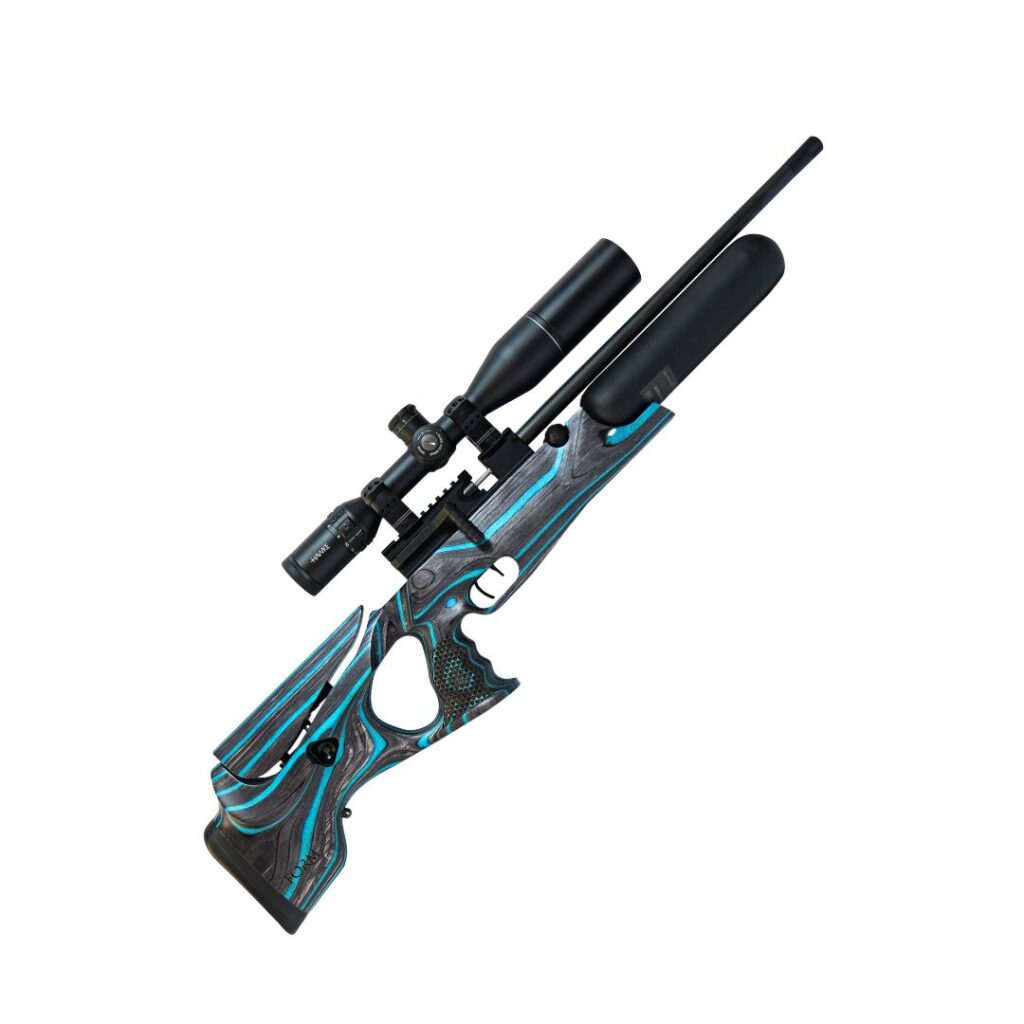
What Is a PCP Air Rifle? A Complete Beginner’s Guide
If you’re new to air guns or looking to upgrade from a spring-powered rifle, you’ve probably come across the term PCP air rifle. PCP stands for Pre-Charged Pneumatic, and these rifles have become the preferred choice for target shooters, hunters, and competitive marksmen because of their exceptional accuracy, power, and consistency.
But what exactly is a PCP air rifle, and why is it so popular?
In this guide, we’ll explain everything you need to know, including how PCP air rifles work, their advantages, disadvantages, common uses, and whether they’re the right choice for you.
What Is a PCP Air Rifle?
A PCP (Pre-Charged Pneumatic) air rifle is an air-powered gun that uses compressed air stored in a high-pressure reservoir to fire pellets. Unlike traditional spring-piston or CO₂-powered air rifles, a PCP rifle stores air at extremely high pressures—typically between 2,000 and 4,500 PSI.
Each time you pull the trigger, a small amount of this compressed air is released, propelling the pellet through the barrel at high speed with remarkable consistency.
Because there is no heavy spring or gas ram moving during the shot, PCP rifles produce minimal recoil, making them one of the most accurate air rifle types available.
How Does a PCP Air Rifle Work?
Understanding the working mechanism of a PCP air rifle is surprisingly simple.
Here’s the basic process:
- The rifle’s air cylinder is filled using a hand pump, scuba tank, or high-pressure compressor.
- Compressed air is stored safely inside the onboard reservoir.
- Pulling the trigger opens a valve for a fraction of a second.
- A controlled burst of compressed air pushes the pellet through the barrel.
- The valve closes immediately, conserving the remaining air for future shots.
Most modern PCP rifles include a pressure regulator that ensures every shot uses nearly the same amount of air. This results in consistent pellet velocity and excellent shot-to-shot accuracy.
Main Components of a PCP Air Rifle
A PCP air rifle consists of several important parts:
Air Reservoir
The reservoir stores compressed air under high pressure. Larger reservoirs generally provide more shots before needing a refill.
Pressure Regulator
A regulator controls the amount of air released with each shot, improving consistency and accuracy.
Valve System
The firing valve opens momentarily when the trigger is pulled, allowing compressed air to propel the pellet.
Barrel
High-quality rifled barrels stabilize pellets during flight, increasing precision.
Magazine or Single-Shot Tray
Many PCP rifles feature multi-shot magazines, allowing quick follow-up shots without manually loading each pellet.
Advantages of PCP Air Rifles
PCP air rifles offer several advantages over other air gun systems.
Exceptional Accuracy
Since there is virtually no recoil or vibration during firing, shooters can maintain a stable sight picture, resulting in tighter shot groups.
High Power
Many PCP rifles generate enough energy for:
- Target shooting
- Pest control
- Small game hunting (where legally permitted)
- Long-range airgun shooting
Some high-powered models can achieve velocities exceeding 1,000 FPS, depending on caliber and pellet type.
Multi-Shot Capability
Unlike break-barrel rifles, most PCP models include magazines holding between 8 and 20 pellets, enabling rapid follow-up shots.
Smooth Shooting Experience
The absence of spring movement makes shooting much quieter and more comfortable.
Consistent Performance
Regulated PCP rifles maintain consistent muzzle velocity over dozens or even hundreds of shots.
Disadvantages of PCP Air Rifles
While PCP rifles offer many benefits, they also have a few drawbacks.
Higher Initial Cost
PCP rifles are generally more expensive than spring-powered air rifles.
In addition to the rifle, you’ll likely need:
- A high-pressure hand pump
- A scuba tank
- Or an air compressor
These accessories increase the overall investment.
Requires Air Refills
Unlike spring rifles that simply require cocking, PCP rifles eventually need to be refilled with compressed air.
Depending on the reservoir size and power setting, one fill may provide anywhere from 30 to over 300 shots.
More Maintenance
Although PCP rifles are reliable, they require periodic maintenance such as:
- Inspecting O-rings
- Keeping moisture out of the air reservoir
- Cleaning the barrel
- Proper storage
PCP Air Rifle vs Spring-Piston Air Rifle
| Feature | PCP Air Rifle | Spring-Piston Air Rifle |
|---|---|---|
| Power Source | Compressed air | Mechanical spring |
| Recoil | Very low | Noticeable |
| Accuracy | Excellent | Good |
| Noise | Generally quieter | Louder |
| Maintenance | Moderate | Low |
| Cost | Higher | Lower |
| Ease of Shooting | Very easy | Requires technique |
| Multi-shot Options | Yes | Usually no |
For beginners focused on precision shooting, many experienced shooters consider PCP rifles easier to master because they eliminate recoil-related shooting errors.
Common Uses of PCP Air Rifles
PCP rifles are incredibly versatile.
Target Shooting
Competitive shooters appreciate the outstanding consistency and precision offered by PCP platforms.
Field Target Competition
Many championship-winning field target competitors rely on PCP rifles because of their excellent accuracy.
Pest Control
Farmers and landowners often use PCP rifles for humane pest management where local regulations permit.
Small Game Hunting
Higher-powered PCP rifles are commonly used for rabbits, squirrels, and similar game in regions where airgun hunting is legal.
Always check your local laws regarding hunting seasons, calibers, and minimum energy requirements.
Popular PCP Air Rifle Calibers
PCP rifles are available in several calibers.
.177 Caliber
- Ideal for target shooting
- Flat trajectory
- Lower pellet cost
- Excellent accuracy
.22 Caliber
- Greater impact energy
- Popular for pest control
- Good balance between power and shot count
.25 Caliber
- Heavy pellets
- Increased stopping power
- Preferred by many hunters
Larger calibers such as .30 and above are also available for specialized applications, subject to local laws.
How Is a PCP Air Rifle Filled?
There are three common methods.
Hand Pump
The most affordable option, although filling a large air reservoir requires physical effort.
Scuba or Carbon Fiber Tank
Fast and convenient, making it a favorite for frequent shooters.
High-Pressure Air Compressor
Modern compressors designed for PCP rifles provide the quickest and most convenient refill solution, especially for regular use.
Who Should Buy a PCP Air Rifle?
A PCP air rifle is an excellent choice for:
- Beginners seeking maximum accuracy
- Target shooters
- Competitive shooters
- Pest control users
- Experienced hunters
- Long-range airgun enthusiasts
If you’re willing to invest in the necessary charging equipment, a PCP rifle offers one of the best shooting experiences available.
Tips for Maintaining a PCP Air Rifle
Proper maintenance helps extend the life and performance of your rifle.
- Keep the air reservoir dry to prevent internal corrosion.
- Use clean, filtered compressed air for refilling.
- Store the rifle with some pressure remaining in the reservoir, following the manufacturer’s recommendations.
- Regularly inspect seals and O-rings for wear.
- Clean the barrel using airgun-safe cleaning tools and materials.
- Avoid overfilling beyond the recommended pressure.
Routine care ensures consistent performance and long-term reliability.
Frequently Asked Questions
Is a PCP air rifle better than a spring air rifle?
For accuracy, ease of shooting, and consistency, many shooters prefer PCP air rifles. However, spring-piston rifles are typically less expensive and do not require external charging equipment.
How many shots can a PCP air rifle fire on one fill?
Shot count varies by model, caliber, reservoir size, and power setting. Many rifles provide between 30 and 200 shots, while some larger or lower-power models can exceed this range.
Are PCP air rifles suitable for beginners?
Yes. Although the initial setup is more expensive, PCP rifles are often easier to shoot accurately because they produce very little recoil.
Do PCP air rifles require a compressor?
Not necessarily. You can fill a PCP rifle using a hand pump, a scuba or carbon fiber tank, or a compatible high-pressure air compressor.
Are PCP air rifles legal?
Laws vary by country, state, and region. Always check local regulations regarding ownership, transportation, power limits, and hunting before purchasing or using a PCP air rifle.
A PCP air rifle is one of the most advanced and capable types of air gun available today. By storing compressed air in a high-pressure reservoir, it delivers exceptional accuracy, consistent performance, minimal recoil, and impressive power. These qualities make PCP rifles a top choice for target shooting, competition, pest control, and small game hunting where permitted by law.
While they require a larger upfront investment and a reliable method of refilling the air reservoir, many shooters find the performance gains well worth the cost. If precision, smooth operation, and repeatable accuracy are your priorities, a PCP air rifle is an excellent option that can provide years of dependable shooting enjoyment with proper care and maintenance.
